Wednesday, March 20, 2024

Facilitated messages attributed to different people show distinctive styles, but this fails to rule out complete facilitator control

 (Cross-posted at FacilitatedCommunication.org).

I got so distracted with other pro-FC developments that have emerged since last August—Angie Kim’s Happiness Falls, Jennifer Binder-Le Pape’s purported myths about RPM/S2C, Vikram Jaswal’s latest pro-S2C paper, and some half-dozen other developments—that I’m only now getting to the second of two papers published this past year by Nicoli, Pavon, Grayson, Emerson, and Mitra, the first of which I critiqued here at the end of August.

As with Nicoli, Pavon, Grayson, Emerson, and Mitra (2023), this second paper, (Nicoli, Pavon, Grayson, Emerson, Cortelazzo, and Mitra, 2023), focuses on touch-based facilitated communication (FC) as used with individuals with cognitive and sensorimotor disabilities. (The individuals’ precise diagnoses and measured language skills remain unspecified). The authors’ other paper provided a highly quantitative task analysis of the sensorimotor skills involved in sitting in front of a keyboard and pointing to letters; this paper provides a highly quantitative stylistic analysis of a database of facilitated messages in Italian. Its goal is to explore who authored these messages—the facilitator, the facilitated person, or some combination of both.

This article purports to build on other analyses of facilitated messages that have found the texts of the facilitated individuals (or facilitatees) to differ stylistically from those of their facilitators—particularly in the more frequent appearances of unusual words and neologisms (made-up words). Such differences, the authors acknowledge, are not proof of authorship by the facilitatees (they cite Saloviita, 2018). And it’s impossible to know, they concede, what the facilitatee’s texts would look like, stylistically speaking, without the assistance of a facilitator, since none of the facilitatees can type independently. But the authors nonetheless insist that such a quantitative study can potentially answer questions about authorship.

Of course, there’s a much simpler, more definitive procedure that can answer—and has answered—that question: the controlled message-passing experiment in which the facilitator is blinded to the answers to the questions asked of the facilitatee. Dozens of such message-passing tests were conducted back in the 1990s, some 25 to 30 years before this article was written, beginning shortly after FC was introduced to the United States in the late 1980s. The answer was total facilitator control. The facilitators were the sole authors of the facilitated messages.

Despite this, FC persists, and Nicoli, Pavon, Grayson, Emerson, Cortelazzo, and Mitra (2023) open by introducing it. The authors describe FC as a technique used with people with a combination of “atypical cognitive capacity” and “sensorimotor coordination deficits” to “physically support them, for example, by touching their torso or arm as they type.” The authors add that “The neurophysiological mechanism of such motor assistance for linguistic expression is not known.”

Given what all the rigorous studies of FC have shown, namely that the literate facilitator is controlling the messages by directing and cueing (however unwittingly) the facilitatee, “not known” is bit of a stretch.

It’s not that the authors are unaware of this possibility: they acknowledge that the prevailing view among experts is that of total facilitator control via facilitator cues. But they insist that it’s just one theory about what’s happening, and they proceed to propose that the facilitative touch could serve, not to cue and control, but instead to help to reduce the “cognitive load” of the facilitated person. Their only evidence for this is their other 2023 article—the one I critiqued here.

While the authors also acknowledge the results of the message-passing tests of the 1990s, they also cite the various “alternative” tests that message-passing-averse researchers have conducted since then: measurements of eye-gaze fixations on letters (Jaswal et al., 2020); measurements of index-finger accelerations towards letters (Faure et al., 2021); and linguistic analysis of facilitated output (Bernardi & Tuzzi, 2011; Niemi & Kärnä-Lin, 2002; Tuzzi et al., 2004; Tuzzi, 2009). (For our critiques of these articles, see here and here). These various studies, the authors claim, create a more “complex picture” of what’s going on and suggest some involvement of the user (the facilitatee) in creating the message. Stylistic analysis in particular, the authors claim, allows for

a time-extended perspective on the text construction process as it operates naturally, without the insertion of experimental artifacts. The analysis of text generated over long periods of time, while the user and their partnership with facilitators evolve, provide a stronger test of individual influences than snapshot methods using arbitrary tasks in which the user possibly is not motivationally invested.

The authors do not elaborate. In particular, they don’t tell us what sort of “complex picture” or longitudinal text analysis, on one hand, or experimental artifacts, snapshot methods using arbitrary tasks, or lack of motivational investment by the facilitatee, on the other, could possibly account for the common outcome, seen in the rigorous message passing tests of the 1990s, of facilitatees typing out information to which only the facilitator had access—e.g. a picture of a key instead of a flower.

What other explanation there could possibly be—other than the simple, straightforward explanation that the facilitator is the one controlling the messages—is hard to imagine.

Despite their express reservations about this simple explanation, and despite the pro-FC track records of some of their co-authors (see Emerson et al., 2001; Grayson et al. 2012), the authors assure us that “we start from the maximally sceptical position that the facilitator is the sole [authoring] agent”. They proceed to claim that, if the facilitator is the sole author

It should not be possible, then, to find unique stylistic fingerprints associated with specific FC users.

Operating under this purportedly well-founded assumption (more on that shortly), and under their purportedly maximal skepticism, the authors set out to investigate whether children with developmental disabilities “exhibit their own stylistic signatures alongside those of their facilitators.” They look both at whether keeping the facilitator constant across different facilitatees results in one style or many; and at whether keeping the facilitatee constant across multiple facilitators results in many styles or one.

As with Jaswal et al. (2020), Faure et al. (2021), Nicoli, Pavon, Grayson, Emerson, and Mitra (2023), and Jaswal et al. (2024), it would have been orders of magnitude simpler to measure authorship through rigorous message-passing tests. And it would have been orders of magnitude simpler to measure literacy skills through direct assessments of literacy skills (can the facilitatee place the “key” label, say, on a picture of a key, and the “flower” label on the picture of a flower?). Instead, what we get is yet another fancy study: “a multi-level quantitative linguistic analysis” complete with “unsupervised machine-learning methods, particularly cluster analysis.”

Cluster analysis from Nicoli, Pavon, Grayson, Emerson, Cortelazzo, and Mitra (2023)

And what do the multi-level quantitative linguistic analysis, unsupervised machine-learning methods, and cluster analysis show? “[T]hat the users’ stylistic signature is detectable alongside that of facilitators.”

The authors’ conclusion? The texts are co-authored: co-created by both the facilitatee and their facilitator:

The results clearly show that texts written via FC generally present two linguistic imprints: the user and the facilitator. Based on this result, FC is better described as a co-creation process in which two distinct and active participants collaborate in the production of linguistic content.

Here the authors acknowledge, but claim to rule out, the obvious alternative explanation: namely, that the facilitator is subconsciously channeling the imagined writing style of an imagined persona that they’ve projected onto their facilitatee. In fact, this is arguably the most plausible way in which facilitators concoct the messages that they unwittingly facilitate.

But Nicoli, Pavon, Grayson, Emerson, Cortelazzo, and Mitra suggest that this simply isn’t possible, especially given that one of the facilitators in the study facilitated 10 different individuals (the other two involved in the study facilitated six and four respectively). They seem to think that facilitators are somehow facilitating these multiple individuals “simultaneously” and that there’s a limit on how many different personas one can imagine and subconsciously channel. They also seem to think that facilitators are incapable of coming up with different styles on their own and instead would need to have “external models”:

[N]o studies have so far demonstrated the possibility of imitating more than one style simultaneously. This hypothesis, while logically possible, requires demonstration. Besides, even if we assume that facilitators consciously manipulate their style such that statistical models end up attributing texts to users instead, and also that facilitators can maintain up to ten different stylistic systems and use them in the correct contexts, we must contend with the issue of stylistic models…. However, in the case of FC, facilitators have no external models to which they can refer, so it is unclear on which basis they would organize their imitation.

Novelists, among other people, would beg to differ. Would Nicoli, Pavon, Grayson, Emerson, Cortelazzo, and Mitra admit, say, The Moonstone or Dracula or The Color Purple as demonstrations of the possibility of imitating more than one person’s (character’s) style?

Confident that they’ve dispensed with the alternative explanation for their results—facilitators channeling the imagined personas of their facilitatees—the authors draw further conclusions:

  • “FC users possess a level of literacy skills, which any AAC intervention should seek to nurture and develop to improve users' quality of life.”

  • “As the user is clearly a participant in text generation, there is scope for touch-based assistance to serve as a scaffold in DD individuals' linguistic development, and to contribute positively to their quality of life and connection with carers.”

  • “Whether the individual does, or could develop to, generate typed text independently should not determine the value of practising and better understanding touch-assisted typing techniques.”

The authors seem unconcerned with the disturbing implications of life-long dependence on others for communication—especially communication that must be co-authored by those others. Such dependence, fortunately, is bypassed by most legitimate forms of AAC.

But the authors, like other FC proponents, repeatedly characterize FC as a form of AAC: one specifically for those with a combination of sensorimotor and cognitive disabilities. Referencing their other article (Nicoli, Pavon, Grayson, Emerson, and Mitra, 2023), the authors suggest that the issue for such doubly-disabled individuals isn’t a lack of linguistic skills, but of challenges involving cognitive overload and planning difficulties that the facilitator’s contact on the facilitatee’s arm or torso somehow ameliorates. Linguistic skills, purportedly, are intact, and facilitation serves to unlock them, providing

cognitive simplification by reducing the cognitive demands of formulating a full-language expression… or by reducing the overall cognitive demands of the task by supporting attention, providing emotional reassurance and reducing the cognitive demands of the co-occurrent motor task while maintaining text-based communication…

As I’ve discussed in earlier posts, for example here, this is at odds with decades of rigorous research on the autistic minimal-to-non-speakers who constitute the majority of people subjected to FC.

Second, the authors cast FC as a form of scaffolding. But scaffolding, by definition, is something that (1) supports something—i.e., existing skills and (2) will eventually be removed—i.e., when existing skills reach mastery.

Third, they characterize FC as a teaching aid. But they don’t say what it’s teaching. What could it possibly be that facilitators are instructing the facilitatees by touching their arms or torsos?

Then there’s the problematic notion of co-authored messages: messages, that is, that are purportedly co-constructed by the facilitator and facilitatee. On one hand, the authors acknowledge that who constructs what is unclear from their data/results:

The nature of the corpora and these methods do not allow us to discern the details of what originates with the user and the facilitator. The scope of these analyses is at the stylistic level with no presumption nor power to distinguish facilitators' traits from users' features on a sentence-by-sentence basis. Also, these analyses do not allow any comment on how the facilitator influences and supports the user. These questions require other methods and task-oriented analyses. What the present results clearly show is that the user is not linguistically passive, and the facilitator moulds rather than wholly constructs the typed text.

In addition, they acknowledge that:

Co-authorship does not offer certainty that a message written by integrating two linguistic sources fully mirrors the FC user's own intention.

But then, noting that what was most stylistically distinct about the facilitated messages of given facilitatees were their unusual word choices, they hypothesize that the facilitatees supplied the content words and the facilitators supplied the syntactic and morphological framework:

[The] facilitators create syntactical structures within which users can fill in their own content… Syntactical scaffolding by the facilitator may also involve adjusting morphological endings, suggesting linkers or auxiliary verbs, or providing syntagmatic prompts to help begin communication (e.g. “I think that …”, or “I feel that …”)…. In this respect, the facilitators' work would be comparable to that of editors.

How one person supporting the arm or torso of another person promotes this kind of division of linguistic labor (content words vs. syntax), editing (adding and adjusting of endings and function words), and syntagmatic prompting is left unsaid. Such a linguistic cooperation/co-construction, if that’s actually what’s going on, is unlike anything seen in any other interpersonal collaboration anywhere else on planet Earth.

What’s much more likely is that the collaboration, if that’s the right word for it, operates at the level of individual letters. Sometimes the facilitatee manages to hit an unexpected letter, and the facilitator’s non-conscious response is to cue one of those unusual words or neologisms so often seen in FC.

Actual communicative collaborations, of course, involve conscious behaviors. Given this, if the authors were truly convinced that that was what was going on and genuinely curious about who was contributing what, why didn’t they simply query the facilitators? Why didn’t they dispense with all the quantitative cluster analyses and post-analytical speculation and simply ask them, directly: “Which parts of the sentence did you contribute and which parts did you leave up to the facilitatee?”

Better yet, talk the facilitators—and yourselves—into doing a simple, straightforward message-passing experiment.

REFERENCES

Bernardi, L., & Tuzzi, A. (2011). Analyzing written communication in AAC contexts: A statistical perspective, Augmentative and Alternative Communication, 27:3, 183-194 DOI: O.3109/07434618.2011.610353

Emerson, A., Grayson, A., & Griffiths, A. (2001). Can't or Won't? Evidence relating to authorship in Facilitated Communication. International Journal of Language and Communication Disorders, 36, Supplemental: 98-103. DOI: 10.3109/13682820109177866

Faure, P., Legou, T., and Gepner, B. (2021). Evidence of Authorship on Messages in Facilitated Communication: A Case Report Using Accelerometry. Frontiers in Psychiatry. DOI: 10.3389/fpsyt.2020.543385

Grayson, A., Emerson, A., Howard-Jones, P., and O’Neil, L. (2012). Hidden communicative competence: Case study evidence using eye-tracking and video analysis. Autism. 16 (1); 75-86. DOI: 10.1177/1362361310393260

Jaswal, V.K., Wayne, A. & Golino, H. (2020) Eye-tracking reveals agency in assisted autistic communication. Scientific Reports 10, 7882. DOI: 10.1038/s41598-020-64553-9

Nicoli G, Pavon G, Grayson A, Emerson A and Mitra S (2023) Touch may reduce cognitive load during assisted typing by individuals with developmental disabilities. Frontiers in Integrative Neuroscience 17:1181025. doi: 10.3389/fnint.2023.1181025

Nicoli G, Pavon G, Grayson A, Emerson A, Cortelazzo M and Mitra S (2023) Individuals with developmental disabilities make their own stylistic contributions to text written with physical facilitation. Frontiers in Child and Adolescent Psychiatry 2:1182884. doi: 10.3389/frcha.2023.1182884

Niemi, J., & Kärnä-Lin, E. (2002). Grammar and Lexicon in Facilitated Communication: A Linguistic Authorship Analysis of a Finnish Case, Mental Retardation, 40:5, 347-357 DOI: 10.1352/0047-6765(2002)040<0347:GALIFC>2.0.CO;2

Saloviita T. (2018). Does linguistic analysis confirm the validity of facilitated communication? Focus Autism and Other Developmental Disabilities, 33(2):91–9. doi: 10.1177/1088357616646075

Tuzzi, A., Cemin, M., & Castagna, M. (2004). "Moved deeply I am" Autistic language in texts produced with FC, Journées internationales d’Analyse statistique des Données Textuelles, 1097-1105

Tuzzi, A. (2009). Grammar and lexicon in individuals with autism: A quantitative analysis of a large Italian corpus, Intellectual and Developmental Disabilities, 47:5, 373-385 DOI: 10.1352/1934-9556-47.5.373

Wednesday, March 13, 2024

Life lessons from programming

  1. Your instructions must be crystal clear, not omit any steps, and anticipate all possible scenarios.
  2. If something goes awry, there’s always a logical explanation.
  3. If something goes awry, it’s your fault, not that of The Cosmos.
  4. You are not the victim of an irrational universe.
  5. Instead, you are complicit in much of the irrationality that most directly affects you.

I was reminded of these lessons last week when creating a new username and password facility for SentenceWeaver: a tricky endeavor as I didn’t want to undermine the older first-and-last-name-based logins that my current users are using. The trickiness was exacerbated by the fact that there was some zombie code hiding in one of my files–entirely my fault, of course.

Wednesday, March 6, 2024

Illusions of literacy in nonspeaking autistic people: a response to Jaswal et al. 2024

 (Cross-posted at FacilitatedCommunication.org).

Do minimally-speaking autistic individuals have literacy skills?

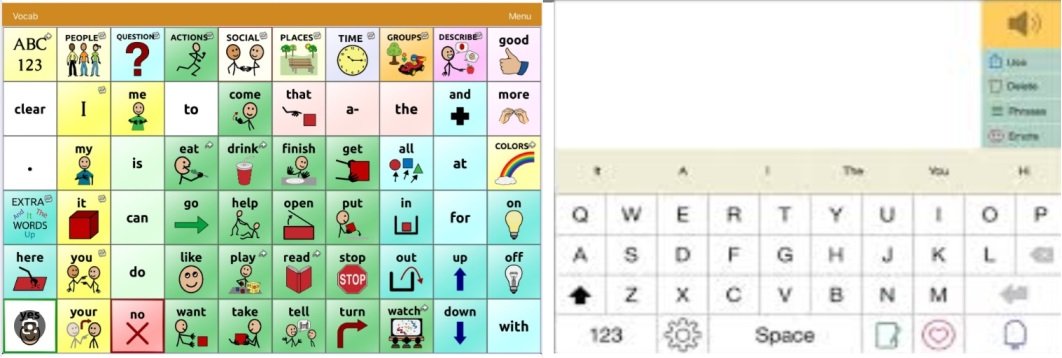
You might assess this by seeing if such individuals can associate word labels with objects—placing the “dog” label, say, on a picture of a dog, and the “cup” label on the picture of a cup. You might assess this by seeing if the person can independently write or type out word labels of their own for the dog and the cup. You might assess this by presenting the person with a note that says, say, “Do you want to watch a video or go outside?” and seeing if the person, for example, responds by fetching a video-playing iPad. That note could be written on paper, but it could be typed out on the overwhelming majority of AAC devices that, contrary to what the pro-FC sector tells you, include keyboards and regularly expose users to printed word labels.

But why use such direct, straightforward literacy probes when you can instead deploy novel equipment and fancy statistics to generate much more indirect and highly indeterminate results? After all, that’s precisely what Vikram Jaswal did in his recent attempt (Jaswal et al., 2020) to find support for the variant of FC known as Spelling to Communicate (S2C, see Beals, 2021 for a critique of this highly flawed study).

This time around, in a study that has just come out (Jaswal, Lampi, and Stockwell, 2024), Jaswal sets out to explore the literacy skills of minimally-speaking S2C users—which, if they are found to exist in sufficient quantities, might convince some more people that S2C is valid. (In fact, the only procedures that would definitively test the validity of S2C, should anyone ever agree to participate in them, are a series of controlled message-passing tests).

In what the authors tout multiple times as a pre-registered study, they created an iPad game with arrays of symbols that flash one at a time in different sequences. Participants were measured on how quickly they responded to the flashing symbols by tapping on them. Some symbol arrays were alphabetic symbols (letters) that just happened to precisely replicate the letter arrangements of the letterboards used in S2C. Others were arrangements of symbols that look nothing like letters:

(From Jaswal et al., 2024)

In one condition, the Sentences Condition, the letters on the letter array flashed in sequences that spelled short sentences. In this condition the experimenter gave the participant an oral prompt about the given sentence, saying it twice, as in this example: “This time, the letters will flash in a sequence that spells, ‘I should water the backyard today. I should water the backyard today.’”

In the other conditions, no sentence prompt was provided. In the “Matched Symbol Sequences” condition, the symbols flashed in a position sequence that matched the position sequence of the flashing letters in the Sentences Condition. In the “Reverse Letter Sequences” and “Reverse Symbol Sequences,” the flashing letters and flashing symbols followed the flashing letters (or the positions of the flashing letters) of the Sentence Condition sentences in reverse order. For instance, in the case of “I should water the backyard today,” the “Reverse Letter Sequences” followed the sequence “yadotdraykcabehtretawdluohsi.”

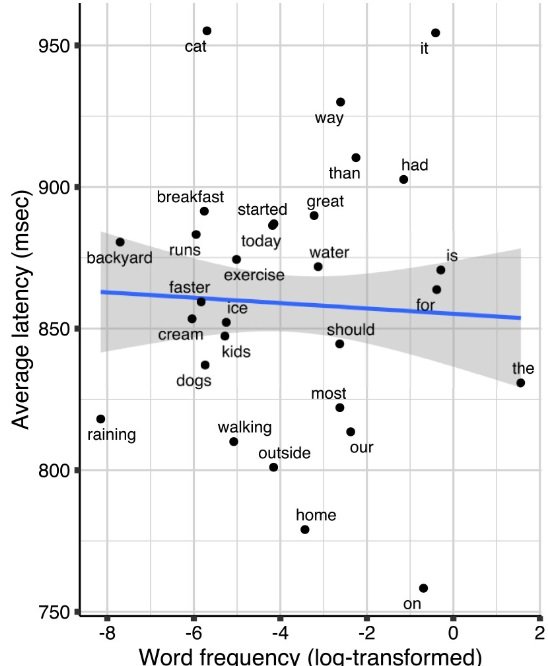
Measuring the “latency,” or the time it took a participant to go from one flashing letter to the next, Jaswal et al. report the following findings:

Latency is, on average, lower (by several tens of milliseconds) for the Sentences Condition than for the other conditions.

In the Sentences Condition, but not in the Reverse Letter Sequences condition, participants tapped flashing two-letter sequences that are relatively common in English spelling (e.g., “he”) faster than they tapped flashing two-letter sequences that are relatively less common (e.g., “hs”).

In the Sentences Condition, participants showed sensitivity to words and word boundaries: they were slower to tap on the first flashing letter of the word than on the subsequent flashing letters of the word.

All of these behaviors, Jaswal et al. argue, mimic the behavior of literate individuals when they type. Just how closely, however, remains unexplored, as the study reported no comparisons on the flashing letter/symbol tasks between these participants and a comparison group whose literacy was beyond dispute.

But even if these patterns of relative tapping speed on flashing letters/symbols mimic those of people whose literacy is beyond dispute, is this enough to conclude that the autistic participants are literate? Does it mean, say, that they understand written commands to “water the backyard”?

In fact, the difference between

  • (a)

    • tapping the sequence “Ishouldwaterthebackyardtoday,” guided entirely by flashing letters

    • tapping that flashing sequence faster than both the flashing sequence “yadotdraykcabehtretawdluohsi” and flashing sequences of symbols that look nothing like letters, and

    • pausing slightly, while tapping the flashing sequence “Ishouldwaterthebackyardtoday,” between the flashing “I” and the flashing “s,” the flashing “d” and the flashing “w,” the flashing “r,” and the flashing “t,” the flashing “e” and the flashing “b,” and the flashing “d” and the flashing “y”

and

  • (b)

    • knowing what the printed words “I,” “should,” “water,” “the,” “backyard,” and “today” actually mean

Is quite vast.

Jaswal et al. acknowledge the multiple years of experience that most of their participants have had, via S2C, in pointing to sequences of word-spelling letters on held-up letterboards (two participants had between one and two years of experience; the remaining 29 had at least two). And they acknowledge that these experiences could have taught the participants statistical regularities about letter sequences and word boundaries that could explain these results. But they argue that this explanation is ruled out by the fact that the participants (1) weren’t faster with common, flashing two-letter sequences in Reverse Letter Sequences condition (where the letters didn’t spell words), and (2) weren’t consistently faster at tapping flashing letter sequences for more common words than for less common words.

There are major problems with these lines of reasoning, however. In the Reverse Letter Sequences, the sequences so obviously violated English spelling conventions that anyone who has grown accustomed to those spelling conventions—for example by being subjected to years of S2C—will quickly recognize that all bets are off. All of the sequences, that is, contained sub-sequences that are impossible to parse into words:

  • ohy, ehtr, dluohsi, afkaer, ofmaer, ahsdikeht, ohya, ehtno, tsti, sg, odtso, nahtre, ruo, tuo

If they had wanted to, Jaswal et al. could have easily avoided this confound by scrambling the letters in ways that didn’t result in such unparsable sequence. For example, instead of

  • yadotdraykcabehtretawdluohsi

they could have had

  • kaydotdrackabethawdlerthisou

Second, Jaswal et al. assume that what determines how quickly a flashing letter sequence is tapped out is how common the corresponding word is. But, as they themselves propose elsewhere, the issue is predictability: how predictable is the next letter based on what came before? Plenty of common words offer little predictability. Consider the words “it,” “had,” and “way,” which the authors found had high average latency-per-letter (slower typing). With “it,” common though it is, many letters could follow the “i,” and after the “t” the word is over. The same goes for “had” and “way.” It’s longer words with more predictable patterns, even if they’re less common, that should permit lower average latency-per-latter (faster typing). Consider the three words in Jaswal et al.’s sample that show the most extreme combination of lower-than-average commonality (relative to the other words) and lower-than-average latency-per-letter: “walking,” “raining,” and “outside”. By the time you get as far as “walki,” “raini,” and “outs,” the final letters are fully predictable (and, indeed, readily outputted by autofill functions).

(From Jaswal et al. 2024).

But Jaswal et al. propose that the patterns of latency observed in the Sentence Condition and not in the other conditions are evidence, not of a rote, statistical learning of letter patterns, acquired during years of S2C-based prompting, but instead of “motivated, literate participant[s]” who are able to “convert the sentence the experimenter spoke aloud into its written form.”

Of course, if Jaswal et al. had wanted to actually test this hypothesis, they could have included a comparison condition in which the experimenter refrained from reading the sentence out loud.

But this might have put a dent in their grandiose conclusions:

About half of the participants showed the signature pattern consistent with literacy; those who did not show the pattern may also know spelling conventions but be unable to demonstrate their knowledge on our task, which required sustained attention and speeded responses to over 550 targets. Regardless, our findings suggest that at least five times more participants have foundational literacy skills than would be expected from professional estimates based on nonspeaking people’s overt behavior. [Italics mine]

And:

Our finding that participants without phrase speech as well as participants with phrase speech showed the signature pattern of faster responses in the Sentences condition compared to the Matched Symbol Sequences condition… demonstrates that it is possible for nonspeaking autistic people to acquire aspects of literacy regardless of their speech proficiency. Second and relatedly, it is frequently suggested that more positive outcomes are associated with autistic children who achieve functional speech (i.e. phrase speech) by 5 years of age... At least as far as learning foundational literacy skills, there was no difference in our sample of nonspeaking autistic adolescents and adults between those who had some phrase speech and those who did not.

Turning to the question of how these minimally-speaking and non-speaking individuals might have acquired these literacy skills, Jaswal et al. end up, in an odd reversal, admitting that “statistical regularities clearly played a role” and that

the year or more of practice participants had communicating on a letterboard held by a trained assistant may have highlighted orthographic regularities and sound–letter correspondences, though we note that the training our participants had received on the letterboard does not involve explicit instruction on these correspondences.

Indeed.

But the authors appear oblivious to the implications. Learning “orthographic regularities and sound–letter correspondences” isn’t the same as being literate. Consider the stereotypical American Bar/Bat Mitzvah in which a teenager recites passages written in Hebrew without understanding most of the words he/she is pronouncing. Few people would say that that individual is literate in Hebrew. To be literate, sounding out and spelling out letter patterns aren’t enough: you must also know the meanings of whatever it is you’re pronouncing or spelling. Yes, orthographic regularities and letter-sound correspondences are included in foundational literacy skills. But if that’s all you have, you aren’t literate and, unless circumstances change dramatically, you never will be. This is especially the case if most of your “communications” involve S2C, which, with its exclusive focus on letter positions on the S2C board and on prompting kids to point to them (“right next door,” “keep going, keep going,” “you’re almost there”), completely omits meaning.

But Jaswal is no literacy expert. As a result, he has no problem closing the article with what reads like a subtle infomercial for S2C, complete with citations from pro-FC researchers:

An important question for future work will be investigating why, given this underlying orthographic competence, most nonspeaking autistic people do not learn to express themselves in writing. As suggested earlier, part of the challenge is lack of opportunity because of underestimation of nonspeaking autistic people’s capacity to acquire literacy…

[Note the omission here of the various ways, mentioned in the opening paragraph of this blog post and seen accompanying image, in which the evidence-based AAC devices routinely used with nonspeaking autistic people are in fact designed to promote literacy.]

The significant proprioceptive and motor challenges that many nonspeaking autistic people face can also interfere with learning to write by hand or type using conventional interfaces (e.g. Gernsbacher, 2004; Leary & Donnellan, 1995; Torres et al., 2013).

[Note the FC-friendly take on autism as a motor disorder that disrupts “conventional”—i.e., independent—typing, asserted in the pro-FC literature but never actually demonstrated.]

Thus, another important area for future work will be leveraging advances in technology to create accessible and customizable communication interfaces as well as opportunities to practice the skills required to use them.

Stay tuned for future articles by Jaswal et al. on how “advances in technology” can promote sophisticated literacy in minimally-speaking individuals, with the usual conflation of evidence-based AAC technologies with communication tools that, however high-tech they may be, are ultimately facilitator-directed and facilitator-controlled.

Meanwhile, a segment within Jaswal et al.’s final paragraph reminds us of the giant elephant that has been lurking in the room the entire time:

According to the nonspeaking autistic participants in this study and their families, the most effective means of communication available to them currently involves spelling words and sentences on a letterboard held vertically by an assistant. (All the study participants are working on the skills to be able to type without assistance.) Were it not for concerns about the role of the assistant…this would serve as prima facie evidence that they are literate. We used an experimental task that did not involve an assistant (i.e. no one held the iPad or touched participants) to investigate if these participants possess foundational literacy skills. [Italics mine.]

If the participants in the study were able to type out sentences without an assistant on stationary iPads with flashing letters, then why, when typing sentences that aren’t guided by flashing letters, do they need the letterboard to be held up by an assistant?

Such an assistant, as all the available evidence suggests, is the one most likely to be controlling the messages, including the message that this is “the most effective means of communication available to me.” And such an assistant, as all the available evidence suggests, may well be the only truly literate person involved in producing such messages.


REFERENCES

Beals, K. (2021) A recent eye-tracking study fails to reveal agency in assisted autistic communication. Evidence-Based Communication Assessment and Intervention, 15:1, 46-51, https://doi.org/10.1080/17489539.2021.1918890

Beals, K. (2024) Can message-passing anecdotes tell us anything about the validity of RPM and S2C? Evidence-Based Communication Assessment and Intervention, https://doi.org/10.1080/17489539.2023.2290298

Gernsbacher M. A. (2004). Language is more than speech: A case study. Journal of Developmental and Learning Disorders, 8, 79–96. https://www.ncbi.nlm.nih.gov/pmc/articles/PMC4266410/

Jaswal, V. K., Lampi, A. J., & Stockwell, K. M. (2024). Literacy in nonspeaking autistic people. Autism, 0(0). https://doi.org/10.1177/13623613241230709

Jaswal, V. K., Wayne, A., & Golino, H. (2020). Eye-tracking reveals agency in assisted autistic communication. Scientific reports10(1), 7882. https://doi.org/10.1038/s41598-020-64553-9

Leary M. R., Donnellan A. M. (1995). Autism: Sensory-movement differences and diversity. Cambridge Book Review Press.

Torres E. B., Brincker M., Isenhower R. W., Yanovich P., Stigler K. A., Nurnberger J. I., Mextasas D. N., Jose J. V. (2013). Autism: The micromovement perspective. Frontiers in Integrative Neuroscience, 7, Article 32. https://doi.org/10.3389/fnint.2013.00032

Vyse, S. (2020). Of Eye Movements and Autism: The Latest Chapter in a Continuing Controversy. Skeptical Inquirer.

Wednesday, February 28, 2024

From proto-syntax to actual syntax

Many minimally verbal, severe-to-moderately autistic individuals are able to pick up, with little to no instruction, what we might call “proto-syntax”: namely, how to put nouns, verbs, and adjectives together in an order that reflects the word order rule of their native languages—whether through speech, written words, or pictures.  For English, this means putting the subject noun before the verb and the object noun after the verb:

  • I want cookie.
  • Daddy push truck.

At the two-word level, proto-syntax includes the “telegraphic speech” evinced not just by language-delayed autistic individuals, but by typically developing two year olds:

  • Truck red.
  • Mommy come.

Some people equate this sort of basic content-word ordering with actual syntax: after all, it implicitly encodes which noun is the subject and which noun is the object. But actual syntax involves so much more than how to order subject and object nouns into simple sentences.

Actual syntax involves not just content words (nouns, verbs, adjectives, adverbs, prepositions) but also verb tense endings, auxiliary verbs, and function words like articles (“a” and “the”) or, in certain contexts, words like “by” or “that.”

Actual syntax involves noun phrases, not just bare nouns: phrases that include not just the noun, but, at the very least (where English is concerned), an accompanying article. It’s what allows you to refer to “the truck” (a specific truck that’s familiar to both speaker and listener) vs. “a truck” (a novel or unspecified truck).

And actual syntax allows for sentence transformations, for example passive voice, in which the subject and object nouns are switched and a specific auxiliary verb and a specific function word are inserted into specific slots in the sentence. For example, in the sentence below, “truck” now comes first, but it is still the object, not the subject, of the verb “push.”

  • The truck was pushed by Daddy. [Here I’ve highlighted, in order: an article, an auxiliary verb, a tense ending, and a function word.]

Actual syntax also involves not just linear sequences, but structure, or groupings of words. Syntactic structure is what differentiates the two meanings of

  • He talked about sex with Dick Cavett.

Syntactic structure what tells you that “who” is the subject of “vanish” but the object of “banish” in this pair:

  • Who do you want to vanish?
  • Who do you want to banish?

And syntactic structure is what tells you that “he” can refer to “John” in the first and second sentences, but not in the third:

  • John keeps saying that he is smart.
  • It's that he's smart that John keeps saying.
  • He keeps saying that John is smart.

Besides syntactic structure, there are syntactic rules. These tell you, for example, how to map basic statements into questions:

  • She is sleeping to Is she sleeping?
  • She slept to Did she sleep? (NOT Slept she? or Did she slept?)
  • She sleeps to Does she sleep? (NOT Sleeps she? Or Does she sleeps?)

Actual syntax, in fact, has so much going on that it takes at least two semesters of advanced linguistics courses focused specifically on syntax to really appreciate what all is involved.

That said, actual syntax is not just an arcane subject for linguists, nor a sort of icing on the linguistic cake for those who are able to sequence bare nouns and verbs into basic subject-verb-object sentences. Actual syntax is the structural backbone of language and the semantic backbone of meaningful communication. It’s what allows people to express statements that go beyond the immediate here and now to the past, future, hypothetical, and counterfactual. It’s what allows reminiscences, future planning, problem solving, and precautions (“if you run into the street without looking, you might get hit by a car”). It’s what allows you to not just answer other people’s questions (which is how so many autistic individuals spend so much of their instructional hours), but to ask questions of your own.

Indeed, so important is the ability to ask questions that two prominent autism researchers, Lynn Koegel and Robert Koegel, have specifically targeted this skill as a pivotal skill that, when explicitly instructed, helps individuals with autism improve upon their conversational initiation skills—an area of significant and widespread difficulty in autism.

For me in particular, with my linguistic connections to syntax and, more importantly, my personal and professional connections to autism, syntax is so important that I’ve devoted over a decade of my professional life to developing the only software tool that teaches the full gamut of expressive syntax skills to individuals with autism.

It’s easy to underestimate what goes into such a tool—especially given the number of apps that teach one or another tiny subset of the skills involved in forming the most basic of sentences. A software tool that teaches all of the syntactic phenomena of English, with enough exercises for instruction, practice, and generalization, requires hundreds of pages of complex linguistic processing code, and thousands of pages of lesson code, developed over years of beta-testing with individuals at multiple levels of syntactic development.

Here’s just a tiny a sample of what that translates into in practice:

https://autism-language-therapies.com/HTML5/Demo1.html

Thursday, February 22, 2024

Myths about myths, validity, and natural message-passing tests, Part II

(Cross-posted at FacilitatedCommunication.org).

This post continues my critique of Jennifer  Binder Le-Pape’s recent blog post on the official Spelling to Communicate (S2C) website. This piece, as I noted earlier, professes to give readers valid, evidence-based arguments against what she calls the “top 10 myths” perpetrated by critics of Spelling to Communicate and other variants of facilitated communication (FC).

What Binder-Le Pape actually puts forth, however, are a combination of argument from authority, straw man arguments, circular reasoning, and unsupported and misleading statements. Last time I showed how this plays out in her first 5 purported myths; I pick up here at Myth 6.

Myth 6, per Binder-Le Pape, is that “It is dangerous to presume competence; an individual should prove that they are authentically communicating before participating in a public forum.” Here, Binder-Le Pape cites the legal system, which, she says, “presumes adults to be competent unless proven otherwise.” This would make it legally impermissible to assess people for competence. After all, if we’re required to presume competence, then presumably we shouldn’t be assessing it. But most of us recognize that evaluations of competence are sometimes necessary.

Standard evaluations of competence are psychological evaluations, which are supposed to be conducted without facilitators facilitating. Binder-Le Pape claims that “many individuals have undergone rigorous evaluations, only to be repeatedly questioned by detractors who demand a repeat performance or an additional one based on their preferred method.” She does not tell us what these rigorous evaluations entailed.

Myth 7, per Binder-Le Pape, is “Using prompts in the early stages of learning to use S2C renders it invalid.”  This one is a straw man. Many people recognize that prompts are needed in the early stages of learning.  The key question is whether those prompts are faded. Binder-Le Pape cites applied behavioral analysis (ABA), but here’s what ABA guidelines have to say about prompting.

Once the child has learned to touch one of two items held in front of him, training should be given on learning to touch one of two items placed on a table. The procedure is similar, but this type of trial is often a little more difficult for a child because it eliminates most inadvertent prompts (e.g., slight position, movement, or eye prompts).

(From Sundberg and Partington’s ABA-based Teaching Language to Children with Autism and Other Developmental Disabilities, italics mine).

Unlike S2C, which has no such guidelines, ABA makes a distinction between teaching prompts and inadvertent prompts, has protocols for fading inadvertent prompts as soon as possible, and recognizes the potential of slight movements, including eye gaze, to direct a client’s responses.

Myth 8: “Using S2C or related methods to take standardized tests automatically invalidates their results.” Here what constitutes debunking, for Binder-Le Pape, is simply to list the testing organizations that allow “communication and regulations partners” and “hand-held S2C laminated letterboards.” According to Binder-Le Pape, these include New York’s TASC (its GED or high school equivalency test), Philadelphia’s Keystone, and the ACT. (When I search “laminated letterboard” plus “Keystone”/”TASC”/”ACT”, nothing comes up). She also suggests that the guidelines for two IQ tests—those of the WAIS-IV, which make reference to “preferred mode of accommodation”, and those of the WISC-V, which allude to “clinical judgment” about “modification”—permit this type of “accommodation”.

Myth 9: “Some individuals have made false or unproven accusations using methods similar to S2C, and therefore, no one using these methods should be believed.”  This one is another straw man. The false abuse accusations are one of many problems with FC, but that does not, in and of itself, mean that people using these methods should not be believed. When someone makes a false accusation via FC, the first step should be a rigorous authorship test. Interestingly, these days when judges order such tests, the response has generally been to drop charges—which is quite suggestive of what the people facilitating those charges know, deep down inside, about what rigorous authorship testing would reveal.

Myth 10 is a rhetorical question “Is S2C valid, or is S2C a ‘discredited method’ that has been debunked?” Defining valid as “logically or factually sound”, Binder-Le Pape claims that her above arguments have that characteristic, and refers readers who think those arguments fall short to an earlier blog post of hers which I addressed here.

She then adds as another metric of validity “having legal force or being legally acceptable,” and goes on to cite the ADA on giving “primary consideration to the requests of individuals with disabilities” and on requiring equal educational opportunity. As all the available evidence suggests, however, S2C and its variants interfere with the ability of individuals with disabilities to make requests and diminish their educational opportunities.

Binder-Le Pape also cites the guidelines of the American Speech-Language-Hearing Association (ASHA) on evidence-based practices, noting that they include “clinical expertise/expert opinion,” “evidence”, and “client/parent/caregiver perspectives.” Re the last two, she alludes to her earlier arguments, “valid” as they are in her view. Re clinical expertise/expert opinion, she cites the many speech-language pathologists, occupational therapists, and people with special ed degrees who have come to believe in S2C. She leaves out ASHA’s position statements against S2C and its variants.

Binder-Le Pape concludes by reminding us of the “many, many universities, colleges, government committees, nonprofits, researchers, professors, teachers, doctors, psychologists, occupational therapists, lawyers, and journalists" who support S2C.

The constant appeals to authority throughout this post are a huge red flag. If the strongest case you can make for a particular practice is that most authorities accept that practice, you are on thin ice—particularly if you bear in mind the long history of bigotry in the past century and earlier, including bigotry against people with disabilities, by large numbers of authorities in politics, academia, and journalism.

But Binder-Le Pape is confident that this time the authorities—at least the ones she cites—are on the right side, in contrast to the “small group of detractors” she returns to in her closing remarks.

FC proponents never seem to ask themselves what motivation this “small group” could possibly have for undermining the authentic communications of society’s most vulnerable members.  In fact, we do the opposite. Not only do we advocate against the communication-suppressing practices of S2C and other variants of facilitated communication; many of us have devoted long hours to inventing innovative assistive devices or language teaching tools designed to enhance the independent, authentic communication of minimally speaking individuals.

Naturally, some of our detractors have asserted, without evidence, that we make large amounts of money off of these endeavors: that that’s why we oppose S2C, and that we’re the ones cynically exploiting desperate parents and their vulnerable children.  My guess is that the peddlers of S2C et al, with those “thousands of hours of practice” leading to apparently miraculous language and literacy skills, and the hours of ongoing communication and regulations partnering that many parents outsource to clinics and clinicians, make far more money off of desperate parents than any of us do with our decidedly non-miraculous, low-labor-intensive, assistive and teaching technologies.

These days especially, “skeptic” has a bad ring—and not just when used as a pejorative suffix to words like “climate” and “vaccine.” But the true skeptics I’ve met, including members of this “small group,” are some of the kindest, humblest, most self-effacing people I know. When we critique the opposition, we critique their claims and lack of evidence; we don’t make personal attacks or say nasty things about them behind their backs. Perhaps that’s no accident: when one puts evidence first and insists on being guided by that evidence, that tends to minimize one’s cognitive dissonance—along with the nastiness that cognitive dissonance often gives rise to—and to deliver regular doses of humility.

REFERENCES

Beals, K.P. (2024) Can message-passing anecdotes tell us anything about the validity of RPM and S2C?, Evidence-Based Communication Assessment and Intervention, DOI: 10.1080/17489539.2023.2290298

Sundberg, M. L., & Partington, J. W. (2013). Teaching language to children with autism and other developmental disabilities. Behavior Analysts.