Wednesday, February 7, 2024

Myths about myths, validity, and natural message-passing tests, Part I

 (Cross-posted at FacilitatedCommunication.org).

Curiously, moments after my latest piece in Evidence-Based Communication Assessment and Intervention came out (more on that later), a January blog post on the official Spelling to Communicate (S2C) website crossed my radar. This piece, by S2C promoter and parent Jennifer Binder-Le Pape, professes to give readers valid, evidence-based arguments against what she calls the “top 10 myths” perpetrated by critics of Spelling to Communicate and other variants of facilitated communication (FC).

What Binder-Le Pape actually puts forth, however, are a combination of argument from authority, straw man arguments, circular reasoning, and unsupported and misleading statements.

Among the authorities she cites is herself. In her professional capacity as a strategy consultant, she says, is it her job “to dive into facts and data when confronted with conflicting opinions.” So that’s what she did, she says, with S2C. And in “examining the evidence,” she has learned that “unfavorable views” of S2C are due to “outdated assumptions about autistic individuals.” She does not cite any facts that support this claim.

She also tells us that her son has “shown” numerous professionals that S2C is effective. She does not describe the nature of this demonstration. Instead, she cites the “increasing number of conferences, nonprofits, universities, and media outlets” that now embrace S2C.

She contrasts these authorities with a “small but vocal group of people who seem determined to shut down these efforts at inclusion by insisting that these forms of communication are somehow illegitimate.” This group, she says, holds “opinions” that they present as “the scientific consensus”—which she claims is “incorrect at best and arguably intellectually dishonest.”

The most relevant scientists among whom to solicit a consensus, of course, are those who study language and communication skills in autism, and those who study assisted communication and the potential for cuing and message control by facilitators. Is there a lack of consensus among the scientists who specialize in these areas, and who know about S2C, about the validity of S2C? I wouldn’t be so sure. Many of them keep quiet—perhaps because they know what happens if they speak up.

Critics of S2C and other variants of FC are routinely accused by proponents of FC of espousing hate and causing harm to individuals with disabilities.  Binder-Le Pape is no exception. She cites claims by S2C users that members of the “small but vocal” group of critics have mocked them and hurt their feelings. These claims, of course, are generated by S2C and therefore are only valid if S2C is valid.

But Binder-Le Pape doesn’t go there; instead, she offers consolation to those who have purportedly been harmed by citing the words of civil rights activist James Baldwin. She also cites the Americans with Disabilities Act.

And then she turns to the ten purported myths.

The first is that no research supports S2C. Binder-Le Pape counters this “myth” by claiming the existence of a “growing body” of S2C-supporting research. The only examples she cites—all of them familiar to us at FacilitatedCommunication.org—date back to 2020 and earlier.

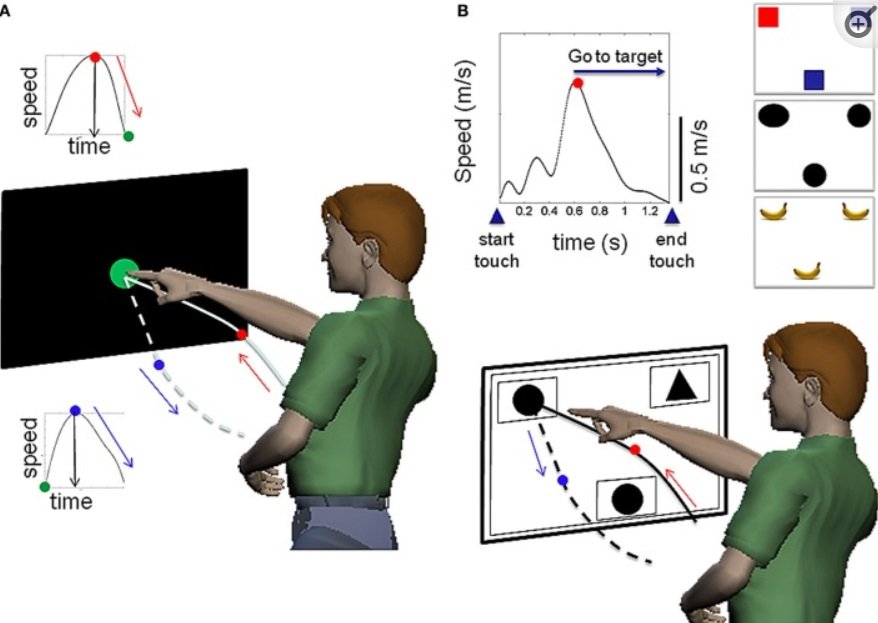
First, she cites Elizabeth Torres, an outspoken believer in all forms of facilitated communication who believes that her research supports a reanalysis of autism as a “micro-movement disorder.” Instead of citing Torres’ research directly, however, Binder-Le Pape cites a 2019 interview with the pro-FC organization “Thinking Person’s Guide to Autism.” Torres’ most recent empirical article about micro-movements in autism, however, dates back to 2013, and we critiqued it here two weeks ago. As I discussed, nothing in that article explains the need for the held-up letterboards and hovering prompters that characterize S2C; in fact, in several ways, Torres’ article undermines the case for S2C.

Next, Binder-Le Pape cites Alexis Woolgar’s work on “hidden ability in autism”, which she describes as “us[ing] portable EEGs to measure specific types of brain activity to establish nonspeaking individuals’ complete comprehension of spoken language.” If you follow the link she provides, you discover that this is not a study at all, but rather a research goal:

We would like to learn more about how their brains process spoken words, using brain imaging technologies that are gentle and fast to set up. The aim of our research is to provide a chance for autistic people to demonstrate how well they understand word meanings.

Binder-Le Pape also cites Phase 1 of an actual study by Woolgar’s lab, but, as you can quickly tell from the abstract, the participants were 20 neurotypical children; no study participants were autistic. None of Woolgar’s actual research, in other words, amounts to any evidence of “complete comprehension of spoken language” by nonspeaking individuals, let alone evidence for the validity of S2C.

The one study cited by Binder-Le Pape that actually does purport to find evidence for S2C is Vikram Jaswal’s infamous eye-tracking study. But this article has been critiqued multiple times for flawed assumptions and flawed methodology, for example here and here. To date, no S2C proponent has publicly critiqued these critiques; at least in public, proponents behave as if these critiques don’t exist.

Finally, Binder-Le Pape refers readers to the articles listed on the pro-FC United for Communication Choice (UCC) website. Many of these are not relevant to FC; most are only indirectly relevant. All of the latter have been critiqued on this website, mostly on this page.  It’s notable that the most recent study in the UCC database dates to 2022.

So much for the evidence that supports S2C. Nor do Binder-Le Pape’s citations show that long-standing assumptions regarding autism are “outdated.” Some dozen decades after Leo Kanner coined the term, autism is still clinically defined as involving low levels of social engagement and high levels of restrictive/repetitive behaviors. And a growing body of clinical data, including a very recent eye-tracking study, shows that the low levels of social engagement begin in early infancy. This diminished social engagement tracks with autism severity and derails the acquisition of language, such that the sophisticated vocabulary and sentence structures of messages generated through FC are extremely unlikely to have been generated by those who are most commonly subjected to FC.

Binder-Le Pape concludes her discussion of the first “myth,” the purported myth that no research supports S2C, by citing the words of S2C families and S2C users, thus returning to the circular arguments with which she opened her blog post. We know their communications are authentic because they say they are; we know that S2C works because they say it works.

Michel Bakni, Wikimedia Commons

Binder-Le Pape’s second myth is that “individuals who spell and type to communicate have nothing original to say, and they parrot the beliefs of their communication partners.” This misstates what critics have actually said, which is that all the available evidence suggests that the communication partners are controlling the messages. This likely message control, in turn, makes it impossible to know what the individuals subjected to S2C have to say, as their words are likely being hijacked by others.

Binder-Le Pape doesn’t seem to realize that there’s a distinction between an FCed person parroting a facilitator’s beliefs and a facilitator controlling the facilitated messages. In the case of parroting, the output reflects the facilitator’s beliefs; in the case of control, the output reflects what the facilitator ascribes (however subconsciously) to the facilitated person. Binder-Le Pape brings up cases of FC-generated opinions that differ from the opinions of facilitators, and FC-generated reports of synesthesia that facilitators themselves don’t experience, and assumes that these differences are evidence that the FC-generated messages can’t be authored by the facilitators. It doesn’t seem to occur to her that one can author a message that reflects beliefs that one ascribes to someone else—which is what all the available evidence suggests is precisely what facilitators are (however subconsciously) doing.

Instead, what we get is more circular reasoning: FC-generated messages are evidence that these FCed individuals have something original to say and that they have difficulty controlling their bodies—and that, therefore, FC is valid. FC is valid because FC is valid.

Myth 3, per Binder-Le Pape, is that “S2C hasn’t proved useful in academic settings.” Her evidence for this is more circular reasoning: through S2C-generated output, S2C-ed individuals are completing high school, attending college, graduating college, and putting “the skills they honed in college to good work.” But S2C has allowed them to do this only if the S2C-generated output is theirs, and not that of their facilitators. Again, S2C is valid because S2C is valid.

Besides the circular reasoning, there’s the argument from authority. Binder-Le Pape cites Harvard, Berkeley, UCLA, Tulane, Oberlin, and Rollins as institutions that have enrolled and graduated individuals she characterizes as “non-speaking autistics who type and spell to communicate”. She also cites Time, Newsweek, Fortune, and Psychology Today as having published the typed output of one of these individuals. S2C is valid, in other words, because all these prestigious institutions behave as if it’s valid.

Myth 4: per Binder-Le Pape, is that “using a CRP [‘communication and regulations partner,’ or facilitator] prevents individuals from developing independent typing skills.” She concedes, without explaining why, that “achieving independence requires thousands of hours of practice.” Nor does she supply any evidence that any S2C-ed individual ever attains independence. True communicative independence, as we have repeatedly explained, includes the ability to type spontaneous messages that match earlier, FCed levels of sophistication without any of one’s facilitators/CRPs within auditory or visual cueing range.  

Instead, Binder-Le Pape proceeds to cite the S2C-generated words of those subjected to S2C, some of whom “say they prefer communicating on a laminated board, as it is faster and more comfortable for them.”  The circularity continues: once again, S2C-generated messages are cited as evidence that S2C-generated messages are valid.

Myth 5 is that “a message-passing test under controlled conditions is the only way to establish an individual’s independent communication.” No, she insists, a message-passing test is only one way; “direct observation” and eye-tracking are alternatives. We’ve already noted problems with Jaswal’s eye-tracking study and seen how other eye-tracking data (the data about diminished attention to social stimuli) has been unfavorable to FC. As for direct observation, it is susceptible to a well-known psychological fallacy known as naïve realism. As anyone who has attended magic shows knows, at least in the context of magic shows, you can’t always believe what you see.

Finally, Binder-Le Pape discusses natural message-passing tests—and this takes me back, as promised, to my just-published article, entitled Can message-passing anecdotes tell us anything about the validity of RPM and S2C? Here I show why naturalistic message-passing tests, including those cited by Binder-Le Pape and others, cannot be used as evidence in support of FC.

We’re half-way through the myths, and this post has gone on long enough, so we’ll pick up next time at Myth 6.

REFERENCES

Beals, K. (2021). A recent eye-tracking study fails to reveal agency in assisted autistic communication. Evidence-Based Communication Assessment and Intervention, 15(1), 46–51. https://doi.org/10.1080/ 17489539.2021.1918890

Beals, K.P. (2024) Can message-passing anecdotes tell us anything about the validity of RPM and S2C?, Evidence-Based Communication Assessment and Intervention, DOI: 10.1080/17489539.2023.2290298

Jaswal, V. K., Wayne, A., & Golino, H. (2020). Eyetracking reveals agency in assisted autistic communication. Scientific Reports, 10(1), 7882. https://doi.org/10.1038/s41598-020-64553-9

Petit, S., Badcock, N. A., Grootswagers, T., & Woolgar, A. (2020). Unconstrained multivariate EEG decoding can help detect lexical-semantic processing in individual children. Scientific reports10(1), 10849. https://doi.org/10.1038/s41598-020-67407-6

Thursday, February 1, 2024

News rundown: more non-academic requirement in schools

(As if grit, growth mindset, mindfulness, emotional intelligence, and all that social stuff weren’t already enough.)

Last year, New Jersey became the first state to require media literacy at every grade level. According to the New Jersey state website, students must now learn "the difference between primary and secondary sources" and "the difference between facts, points of view, and opinions."

Will they also learn the difference between made-up facts and well-substantiated opinions? Or that many primary studies involve flawed research, misleading literature reviews, and footnotes that don’t support the claims?

Last month, New Jersey also became the first state to require “grief education,” which will be integrated into health classes.

According to the New Jersey state website:

New Jersey’s public schools will be required to provide instruction for students in grades 8 through 12, on, at a minimum, the physical, emotional, and behavioral symptoms of grief; coping mechanisms and techniques for handling grief and loss; and resources available to students, including in-school support, mental health crisis support, and individual and group therapy.

Back when I took health, in a less divisive, less emotionally fraught, more self-empowering era, the focus was on how to manage your period, how not to get pregnant, and how to administer CPR.  

Finally, last month, Pennsylvania recently became the 25th state to require financial literacy. Starting in 2026, Pennsylvania high school students will be required to take a semester of financial literacy before graduating. According to the Philadelphia Inquirer:

The new law didn’t mandate what topics schools must include in teaching financial literacy. Instead, it directs the Pennsylvania Department of Education to develop model curriculum and resources, aligned with state academic standards reviewed by the state Board of Education.

This trend, the Inquirer reports, “has been advocated by groups like Next Gen Personal Finance, a nonprofit pushing for all high school students to take a semester of personal finance before graduating” and has hired lobbyists to help states craft legislation.

There doesn’t seem to be an option to place out or opt out if you’d rather take a programming course or another semester of Spanish

Wednesday, January 24, 2024

Why apraxia can’t explain away the need for physical touch, held-up letterboards, or hovering prompters

 (Cross-posted at FacilitatedCommunication.org).

The most helpful comments we receive on this blog are ones that point us to specific articles that we haven’t yet reviewed here and may not be aware of—and that may be of possible relevance to FC.

Last week a reader, commenting on this post, suggested that we “familiarize [ourselves] with some of the most recent research regarding developmental dyspraxia (what some folks refer to as apraxia) in autism to understand the unique motor challenges in autism.” This commenter, who characterized herself as “a PT who has a PhD with the focus on differentially [sic] brain connectivity in autism,” referred us to three articles: Dziuk et al. (2007); Mostofky et al. (2011); and Torres et al. (2013). These articles are not currently included on our website, and so I went and read them a few days ago. In this post, I’ll discuss each one in terms of its connections to claims made in support of FC.

With the first, Dziuk et al. (2007), it’s hard to find any connections. The study is of high-functioning individuals with autism—not the population typically subjected to FC or its variants. The focus is on “skilled gestures”; not pointing. Nor are any of its results surprising: complex motor skills are a common—though not universal—challenge for individuals with autism, including in the high-functioning range.

Mostofky et al. (2011), though more recent, is somewhat out of date: it harks back to the time when everyone thought that defective “mirror neurons” were what underlies core autism symptomology. That didn’t pan out. Another of its culprits, however, has so far withstood the test of time: neuronal under-connectivity, specifically between distant brain regions. The thrust of Mostofky et al. is that children with autism have difficulty, as a result of these factors, not just with skilled motor gestures, but with forming what the authors call “action models,” or “sensory-motor programs that form the brain basis for a wide range of skilled behavior and for understanding others’ actions.” The authors propose that impaired action models result in both complex motor deficits and social deficits. The connection between “action models” and social deficits, however, is unconvincing. Social phenomena are not reducible to the sensory-motor phenomena captured by “action models”; social phenomena have much more to do with facial expressions, language, tones of voice, and interactions.

Mostofksy et al.’s most interesting finding is that individuals with autism, when learning how to execute complex gestures, rely more on proprioceptive feedback (that internal sense of where your body is in space) than on visual feedback. However, the authors make no reference to anything related to FC: not to non-speaking/minimally speaking autism; not to language skills; and not to pointing.

Finally, there’s Torres et al. (2013). The first red flag appears in the introduction: the familiar, FC-friendly claim that autistic individuals lack intentional control:

In autism… typical volitional control is highly compromised often with a striking disconnect between the intentions and the actions of the affected individual.

Torres et al. back this up with one citation: a paper co-authored by FC-proponent Anne Donnellan (Robledo et al. 2012), whose “data” consists only of anecdotal accounts, including some from FCed individuals, along with some claims made by Douglas Biklen, the person who introduced FC to the U.S.

In their own paper, however, Torres et al. mostly eschew anecdotes for high-tech equipment, dazzling us with neurological and kinesthetic terminology, brain diagrams, and graphs. The gist is (1) that the consistent and nonrandom movements that typically constitute the goal-directed behaviors (e.g., reaching and pointing) of typically developing individuals over the age of 4 provide sensory feedback to those individuals about those movements and their associated goals; (2) that this results in reliable expectations about other movements and associated goals (“kinesthetic priors”); (3) that these kinesthetic priors help individuals ascribe intent to movement in general—including that of other people; and (4) that autistic movements persist, beyond the age of 4, in being random enough to impede the acquisition of those “kinesthetic priors.”

And then they take this a few steps further:

We propose the hypothesis that the typical development of ‘kinesthetic priors’ is essential not only for anchoring kinesthetic sensing but also for the typical development of… circuits crucial for flexible hierarchical action planning, shifts of attention, and establishing counterfactuals in symbolic problem solving.

Counterfactual problem solving? Who knew that excessive randomness in movement could lead to difficulties answering questions like “If we had left two hours earlier, what time would we have gotten there?”

To say the least, Torres et al. is a highly speculative paper: the hedge “likely” appears 10 times. Among what’s likely, apparently, is that deficient “kinesthetic priors” could also be the causes of all the core deficits of autism: both the social deficits (specifically, recognizing facial expressions and passing Theory of Mind tests), and the restrictive, repetitive behaviors. In other words, the excessive randomness of movement that supposedly characterizes autism is the essence of autism: autism is a movement disorder—just as FC-proponents have said all along.

But even assuming that all its speculations are true, there are a number of problems with Torres et al. as a pro-FC piece.

First, typical 3-4 year olds, the authors find, have non-random movement profiles similar to those with autism. But typical 3-4 year olds have neither the social deficits nor the restrictive/repetitive behaviors of autism. Neither, incidentally, do those with severe movement deficits like cerebral palsy.

Second, their autistic subjects were both verbal and non-verbal, and yet all exhibited similar randomness of movement: “all fall along the statistical region of the TD [typically developing] 3-4 years old.”  So, even though Torres et al. suggest that issues with randomness might also affect speech, it’s unclear why it would affect the speech of some but not others.

Third (as I discuss in this post), many autistic kids can detect simple intent and readily ascribe some types of intent to people and other agents.

Finally, all of Torres et al.’s subjects can point. Indeed, the focus of their study is on pointing gestures, and even those pointing gestures that involved random movements were frequently accurate (e.g., when individuals were asked to pick out a particular shape from a set of 3: “individuals with ASD often had high accuracy in the match-to-sample decision.” This, of course, undermines one of the usual excuses in S2C and for held-up letterboards: individuals with autism, supposedly, have so much difficulty with fine motor skills like pointing that they need to learn from the S2C practitioners how to “point with their arms” in order to pick out specific letters.

From Torres et al. (2013).

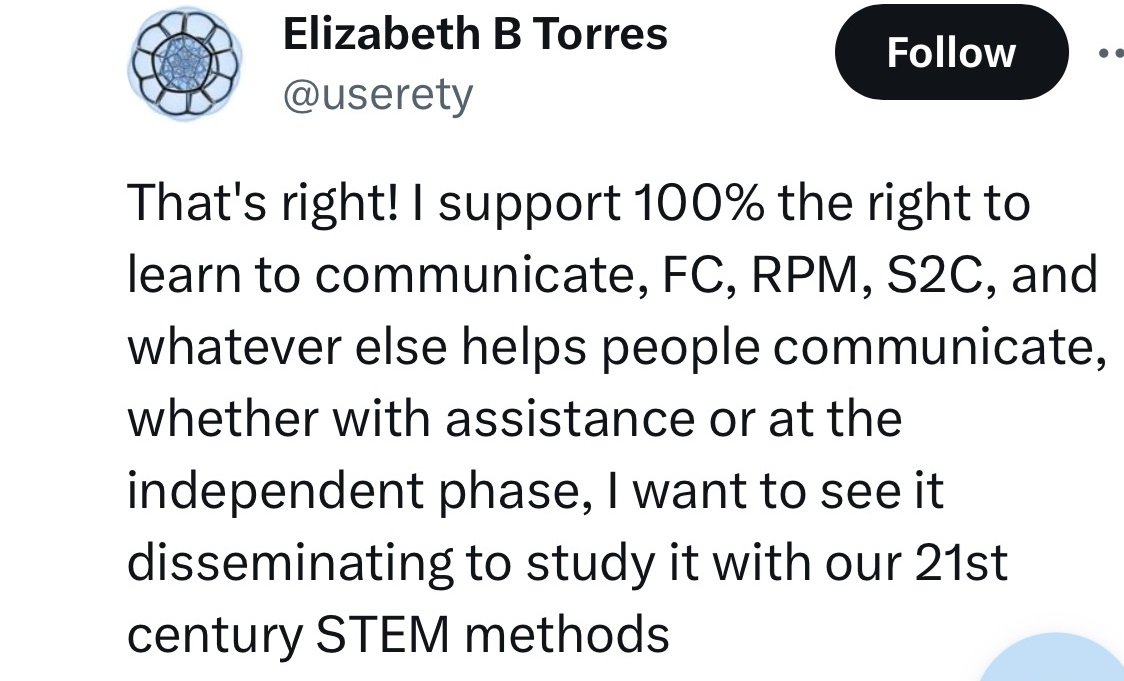
Nonetheless, the lead author in this study, Elizabeth Torres, outed herself on Twitter last February as an enthusiastic supporter of FC and all its variants:

(Here we see the qualified “don’t test” slogan of today’s FC proponents: it’s ok to study FC with “21st century STEM” methods. But it’s not OK to test FC with simple 20th century message-passing tools that would directly answer questions about authorship, including in so-called “independent” typers who can only type spontaneous messages with helpers within auditory or visual cueing range.)

But back to the three articles—all of which focus on movement. Trivially, of course, all observable behavior amounts to movement, and so you could potentially explain everything, from bipolar disorder to trouble producing answers to calculus problems, as a movement disorder. But that would be even more reductionist than Mostofsky’s attempts to reduce social phenomena to “action models.”

Beyond this, there are a few additional problems.

First, none of these three accounts acknowledge the existence of the many autistic individuals, including non-speakers, who exhibit no obvious motor skills difficulties: the minimally speaking 4-year-old who smoothly switches LPs on a record player; the severely autistic 6-year-old who walks like a gymnast, perfectly balanced, along a narrow railing; the non-speaking 10-year-old who can unlock a refrigerator lock, fill a tall glass to the rim with chocolate milk, and move the glass to his lips without spilling. (Or is someone going to claim that these actions are not under volitional control?) For the motor/apraxia account to explain the core symptoms, it would have to be universal.

More importantly, none of these motor accounts explain away the much earlier emerging social attention deficits that characterize autism: that is, the lack of attention to social stimuli in infants as young as 2-6 months old who are later diagnosed as autistic. Brain imaging studies have found that the brains of infants at risk for autism (many of them later diagnosed) show less selective attention to social stimuli (Blanco et al., 2023; Lloyd-Fox et al. 2013); these patterns play out, in turn, in diminished social looking and diminished eye gaze monitoring (Jones et al., 2016; Chawarska et al., 2013; Jones & Klin, 2013; Mastro et al., 2002).

This diminished social attention, in turn, persists into the later years of childhood (See, e.g., Dawson et al., 1998). And as I discussed in my earlier post, it reduces the opportunity to acquire language; indeed, just how diminished a child’s social attention is correlates with just how limited his or her acquired language is.

While difficulties with complex motor movements may overlap with autism and further aggravate opportunities for social learning, they do not explain away the diminished social attention in 4-6-month-olds. Nor do they explain away the need by minimally-speaking individuals, when they point to letters, for physical touch, held-up letterboards, or hovering prompters who bark out “Keep going,” “What makes sense?” and “Right next door!”

REFERENCES:

Blanco, B., Lloyd-Fox, S., Begum-Ali, J., Pirazzoli, L., Goodwin, A., Mason, L., Pasco, G., Charman, T., Jones, E. J. H., Johnson, M. H., & BASIS/STAARS Team (2023). Cortical responses to social stimuli in infants at elevated likelihood of ASD and/or ADHD: A prospective cross-condition fNIRS study. Cortex; a journal devoted to the study of the nervous system and behavior169, 18–34. https://doi.org/10.1016/j.cortex.2023.07.010

Chawarska, K., Macari, S., & Shic, F. (2013). Decreased spontaneous attention to social scenes in 6-month-old infants later diagnosed with autism spectrum disorders. Biological psychiatry74(3), 195–203. https://doi.org/10.1016/j.biopsych.2012.11.022

Dawson, G., Meltzoff, A. N., Osterling, J., Rinaldi, J., & Brown, E. (1998). Children with autism fail to orient to naturally occurring social stimuli. Journal of autism and developmental disorders28(6), 479–485. https://doi.org/10.1023/a:1026043926488

Dziuk, M. A., Gidley Larson, J. C., Apostu, A., Mahone, E. M., Denckla, M. B., & Mostofsky, S. H. (2007). Dyspraxia in autism: association with motor, social, and communicative deficits. Developmental medicine and child neurology49(10), 734–739. https://doi.org/10.1111/j.1469-8749.2007.00734.x

Jones, E. J., Venema, K., Earl, R., Lowy, R., Barnes, K., Estes, A., Dawson, G., & Webb, S. J. (2016). Reduced engagement with social stimuli in 6-month-old infants with later autism spectrum disorder: a longitudinal prospective study of infants at high familial risk. Journal of neurodevelopmental disorders8, 7. https://doi.org/10.1186/s11689-016-9139-8

Jones, W., & Klin, A. (2013). Attention to eyes is present but in decline in 2-6-month-old infants later diagnosed with autism. Nature504(7480), 427–431. https://doi.org/10.1038/nature12715

Lloyd-Fox, S., Blasi, A., Elwell, C. E., Charman, T., Murphy, D., & Johnson, M. H. (2013). Reduced neural sensitivity to social stimuli in infants at risk for autism. Proceedings. Biological sciences280(1758), 20123026. https://doi.org/10.1098/rspb.2012.3026

Maestro, S., Muratori, F., Cavallaro, M. C., Pei, F., Stern, D., Golse, B., & Palacio-Espasa, F. (2002). Attentional skills during the first 6 months of age in autism spectrum disorder. Journal of the American Academy of Child and Adolescent Psychiatry41(10), 1239–1245. https://doi.org/10.1097/00004583-200210000-00014

Mostofsky, S. H., & Ewen, J. B. (2011). Altered connectivity and action model formation in autism is autism. The Neuroscientist : a review journal bringing neurobiology, neurology and psychiatry17(4), 437–448. https://doi.org/10.1177/1073858410392381

Robledo, J., Donnellan, A. M., and Strandt-Conroy, K. (2012). An exploration of sensory and movement differences from the perspective of individuals with autism. Front. Integr. Neurosci. 6:107. doi: 10.3389/fnint.2012.00107

Torres, E. B., Brincker, M., Isenhower, R. W., Yanovich, P., Stigler, K. A., Nurnberger, J. I., Metaxas, D. N., & José, J. V. (2013). Autism: the micro-movement perspective. Frontiers in integrative neuroscience7, 32. https://doi.org/10.3389/fnint.2013.00032

Wednesday, January 10, 2024

Falling for Happiness Falls: Is it too much to ask we overcome our skepticism and just believe?

 (Cross-posted at FacilitatedCommunication.org).

In Happiness Falls, a new book by Angie Kim, a 20-year-old college student, home for the COVID lockdown, recounts the mystery surrounding the disappearance of her father. The last family member to see him is Eugene, one of the narrator’s brothers, a 14-year-old with a diagnosis of autism and Angelman syndrome. Eugene, consistent with his dual diagnosis, is nonspeaking and, according to standard assessments, significantly cognitively impaired. (Indeed, Angelman syndrome, even as a single diagnosis, entails significant cognitive impairment).

Angelman’s syndrome is real, but Happiness Falls is a work of fiction. Why review it here? This is, after all, a website about what science tells us about the pseudoscience of facilitated communication (FC, RPM, S2C, et al.). Fiction, of course, is neither science nor pseudoscience.

So let’s start by skipping over the 372 pages of fiction to the author’s note at the back.  Here are some excerpts:

[T]he communication method in the novel, PPT… [is] inspired by the two real-life therapies with which I’m most familiar and which I’ve seen in person—Rapid Prompting Method (RPM), developed by Soma Mukhopadhyay, an inspiring innovator who has made so much of today’s spelling community possible, and Spelling to Communicate (S2C)TM, developed by Elizabeth Vosseller, whose passion, brilliance, and compassion inspired many of the scenes involving PPT. (p. 379)

And:

I hope [this book] can build on the brave work of books such as Naoki Higashida’s The Reason I Jump and Ido Kedar’s Ido in Autismland and the documentary Wretches and Jabberers in interrogating and tearing down our society’s deeply ingrained assumptions that oral fluency is equivalent to intelligence. (p. 378) (See the “FC in the Media” tab on this website for reviews of these books and movies.)

Then there’s this from the book’s final section, the acknowledgments:

“I have to single out Elizabeth Vosseller for serving as an important beta reader for this book and for introducing me to the Spellerverse and the creative writing students I’ve been privileged to teach.”

Also acknowledged here are the S2C- and RPM-promoting organizations Communication First, Reach Every Voice, Unspoken Thoughts and their associated leaders, as well as Vikram Jaswal’s infamous eye-tracking study.

Given Kim’s objectives, inspirations, and “beta reader,” it should come as no surprise—but, just in case, here’s your spoiler alert!—that:

  1. Eugene, despite his dual diagnoses of autism and Angelman’s syndrome, has no cognitive impairment whatsoever; only motor difficulties that prevent him from speaking.  

  2. What unlocks Eugene is PPT, the fictional, RPM- and S2C-inspired “communication method,” which, like RPM and S2C, involves a “therapist” holding up a letterboard and prompting her client to select letters.

  3. By the time of Eugene’s most recent therapy session, he could answer open-ended questions like “How does the Helen Keller story make you feel?” with answers like “LUCKY I CAN SEE AND HEAR. BUT JEALOUS SHE GOT HER TEACHER AT AGE 7 AND HER FAMILY BELIEVED.”  And shortly thereafter, in response to his sister’s allusion to their father’s theory about happiness—about the relativity of happiness and the need to keep expectations low—Eugene can spell “IT’S A LOT MORE COMPLICATED THAN THAT HE EXPLAINED ALL 2 ME.” 

As the narrative unfolds, many of the false claims made by RPM and S2C proponents are rehashed by Elizabeth Vosseller’s proxy, a PPT therapist named Anjeli, and/or by Eugene’s sister Mia, the novel’s highly credulous narrator:

  • The claim that conditions that appear to involve cognitive impairments, like severe autism and Angelman’s syndrome, instead result from motor impairments.

  • The claim that these motor impairments include extreme difficulties with fine motor tasks like pronouncing words and pointing to things on demand.

  • The claim that these pointing and speaking difficulties are the sole cause of low scores on cognitive tests.

  • The claim that the standard picture/icon-based AAC devices have a “limited array of preschool-level pictures” and do not allow open-ended, typed communication.

  • The claim that non-speakers lack the motor skills to point accurately to pictures on AAC devices.

  • The claim that there’s such a thing as “pointing with your arm” that happens when you point to big letters on a letterboard held in front of you by another person.

  • The claim that “pointing with your arm” is a gross motor skill that is relatively unimpaired in nonspeaking individuals and that can “build neural pathways” for linguistic expression.

  • The claim that, while these individuals appear not to be paying attention, they take in vast amounts of information and acquire literacy skills on their own.

  • The claim that, since the letterboard therapy doesn’t involve touch, there’s no way the therapist could cue the individual’s letter selections.

  • The claim that it’s possible for facilitators to hold the letterboard completely still and give off no other cues—e.g., the sort of body language cues that allowed a famous horse, Clever Hans, to tap out correct answers to math problems.

  • The claim that failure to pass authorship tests—and thereby to establish that the letterboard holder isn’t the one controlling the messages—is the result, not of control by the letterboard holder, but of anxiety on the part of the person selecting the letters.

Rebuttals to all of these false claims can be found on this website; I won’t repeat them here. However, author Kim, as a professional writer, often outdoes other RPM/S2C promoters in articulating the nuances, and some of this material, as well as a few additional pro-RPM/S2C claims she makes, are worth a look. Moreover, Kim, as a fiction writer, is able to flesh out the fictional Eugene in ways that make his apparent cognitive and literacy skills at least somewhat more plausible, when they emerge via the letterboard, than the purported cognitive and literacy skills of most of the real-life individuals who’ve been subjected to RPM/S2C.

Kim, for example, occasionally shows Eugene behaving in ways that suggest focused attention and high-level comprehension: fixating on a phone screen that displays texts from the missing father; turning pale while viewing a video of himself and his father just before the latter’s disappearance;  or, when Anjeli (the therapist) brings up a key topic, “look[ing] back at us [the narrator and her family]” and “smil[ing] in an inviting, almost conspiratorial way.”

Kim, via Mia, also suggests that, even when he doesn’t seem to be paying attention, many additional information sources in Eugene’s surroundings also hold his attention. If he weren’t interested, she explains, he would simply walk away and start jumping (his preferred self-stimulatory activity). Here is her description of his first PPT session:

This entire time, Eugene had been looking away. If you didn’t know him, you would have thought he wasn’t paying attention at all. But we knew—if he wasn’t interested, he would have gotten up and started jumping long ago. (p. 231)

Kim/Mia also suggest that Eugene’s default state of apparently not attending to others when they address him is an act of protest: a deliberate ignoring, that is, of the insulting “baby talk” that he’s endured for years as a result of people’s gross underestimations of his linguistic and cognitive skills.

Echoing an S2C talking point, Anjeli adds that Eugene has been absorbing information “all along”:

from the sidelines, from TV, family dinner conversations, books read to you, your siblings doing homework, all that. But you didn’t look the way you’re supposed to when you’re paying attention—again, because of your motor dysfunction—so everyone thought you were just in your own world. (p. 232)

As for Eugene’s literacy skills, Kim has Anjeli suggest that Eugene could easily have learned to spell “yes” after watching Sesame Street nonstop for fourteen years, and she has Mia recall Eugene’s uncompromising preference for having the captions on when watching videos. As I’ve discussed elsewhere on this blog, however, literacy cannot be reduced to spelling. The essence of literacy is mapping text to words to meaning: that is, mapping the letter sequence “y-e-s” to the word “yes,” and thence to the rather abstract, affirmative meaning of “yes”. Learning how words map to meanings requires attention to how people use words. Attention to how people use words requires, for the more basic words that must be acquired before “yes” is, monitoring and following people’s eye gaze when they speak. These behaviors—called “joint attention”—are readily observable when they occur, and are severely reduced in severe, non-speaking autism.

Also readily observable is reading behavior. As I discussed in an earlier post, it is not enough to simply gaze at a page of text in order to read it: one’s eyes must move back and forth, left to right, line by line, letter-fixation by letter-fixation.

In that same post, however, I also wrote this:

Ay, but there’s a rub. Somewhere in FC Land I hear voices reminding me that FCed kids are geniuses. How do I know that they aren’t actually “visual thinkers” with photographic memories that allow them to “take a picture” of a page of text, look away, and then read the page in their heads—perhaps in ways that are invisible to others?

Right on cue, here’s our narrator on Eugene’s reading behaviors:

He didn’t look the way most people did, with their eyes moving left to right and up to down, but more like he was taking a picture of all the words together as a whole: his eyes fixed on the screen, squinting as if to bring the words into focus, and then, click, a hard blink. (p. 58)

For a discussion of why this kind of photographic memory doesn’t work for reading, I refer readers back to my earlier post.

One of the novel’s most extended, pro-S2C discussions concerns the inconvenient question of why family members often find it so much harder than PPT professionals do to facilitate their own child. This, of course, is readily explained by the fact that those who’ve been facilitating for a long time are better at cuing and controlling messages than novice family members are. But if all the facilitator is doing is holding up a letterboard, why can’t anyone do it?

Mia assures us that “it’s not that simple” (p. 265). She compares facilitators (or “therapists”, as she calls them) to conductors and lion tamers. A conductor can’t effectively conduct an orchestra he’s never worked with, and “an untrained person copying a lion tamer’s exact physical movements and sounds would get their head bitten off” (p. 266). She adds that “it’s ineffable talent” that depends on “a person’s interpersonal connection and influence” (p. 265, boldface mine). Indeed. Clearly much more is involved than simply holding up a letterboard. The questions are what else and why.

The typical replies only raise more questions. One reply goes like this. For some reason, Eugene—like his real-world counterparts—is unable at the initial, multiple-letterboard stages, despite his literacy skills, to determine the specific letterboard he needs in order to select a given letter: “he was dependent on Anjeli to anticipate which letter he needed and hold up the correct letterboard” (p. 266).

But even when the child reaches the single letterboard stage, Mia explains, “being family was a liability” for successful letterboarding. “This makes sense,” she adds, “because have you ever had your parents teach/tutor you…?”

Um, yes. Parents teach kids all the time. Indeed, whether it’s how to tie your shoes or how to sound out words, parents are often, for various reasons, far more effective teachers than other people are. But in what way are letterboard holders teachers? What, exactly, are they teaching?

Before the reader can dwell on these questions, Mia embarks on a second rationalization for why family members have a hard time facilitating:

…I didn’t truly get it until I read a blog post explaining it as a chronic form of complex PTSD. Eugene and others like him had been suffering trauma their entire lives in which they had been trapped, with no one realizing their bodies had been betraying them and locking in their thoughts. The absolute and final totality of this entrapment was devastating to ponder. (p. 267)

This “psychological trauma,” in turn, “added an extra burden that compounded the motor difficulties, made them exponentially harder to overcome” (p. 267).

All this, in turn, connects back to family:

The consensus seemed to be that because family members are the people with the longest history of loving but also not believing in you, around whom you’ve wrapped years of frustration and maybe even betrayal and resentment, communication attempts with them often activated and intensified this barrier of trauma. (p. 267-8)

Indeed, Mia explains, family members who are at all skeptical about letterboarding, like the narrator’s father, are pretty much doomed to fail at it: the child, already traumatized by years of entrapment, can sense their skepticism. It’s essential, therefore, to “let that go”:

Was it too much to ask that Dad overcome his inborn skepticism and just believe? (p. 270).

One could ask the same question of hyperbaric oxygen treatments, fecal transplants, chelation, bleach therapy, or any other of the scores of certainly or probably harmful pseudoscientific autism remedies that have arisen since autism first got on the radar of society’s snake oil sector. Especially when an untested treatment is potentially inhumane and dangerous—as we know it is with FC/RPM/S2C (see the “Harms” tab of this website)—it’s reasonable and rational to request efficacy testing. Is that too much to ask?

Apparently so, according to Kim/Mia. I’ve never heard Vosseller admit to doing a message-passing test on anyone, but her Happiness Falls proxy has apparently tried it. With Eugene:

It never worked. Eugene froze up. I’ve tried this with other clients, and sometimes it worked. But often, it didn’t. I’ve asked them, and they don’t know why they can’t answer either. Of course, they don’t know why their bodies don’t do what they want them to half the time; that’s why they can’t talk to begin with. My best guess is that it’s the anxiety of being tested. Anxiety is huge in the autism and Angelman communities to begin with, and testing triggers the old trauma of not being believed and aggravates the motor dysfunction. Because when things come up organically during our regular session, Eugene tells me stuff I don’t know all the time, stuff Adam [his father] doesn’t even know (p. 309).

“He tells me stuff I don’t know all the time.” We’ve heard that before (see, for example, these reviews of Portia Iversen’s Strange Son and J.B. Handley’s Underestimated). As for the “anxiety defense” of message-passing failure, see the discussion in this review of Jaswal’s eye-tracking paper.

Anjeli also insists there’s no cuing of messages:

People say I must be cuing somehow with my eyes, maybe subconsciously or subtly moving the board as a signal.” She scoffed, shook her head, clearly angry. “It’s ridiculous—as if these kids who are supposedly cognitively impaired, according to these same people, are managing to somehow see and figure out near-invisible secret signals to perfectly spell long answers.” (p. 308).

Well, Clever Hans was able to do this, and while he may well be quite smart for a horse, he’s probably much worse at math than most humans are.

Besides these elaborations of familiar, pro-S2C arguments, Kim/Mia advance two additional ones. One argument, voiced by Mia’s mother, a linguist, uses Chomsky’s notion of the innate capacity of humans to learn language to claim that all humans do learn language.

[L]anguage, the ability, was there, an innate part of Eugene—in other words… Eugene was not nonverbal but merely nonspeaking—and we needed to find the trigger to unlock and access it, activate that group of neurons or whatever. (p. 272)

Making it clear that she’s not just talking about Eugene’s ability to learn language, but his existing linguistic skills, the mother says to him, “I always believed you had words. You just couldn’t express them because we failed you.” (p. 273).

But what Chomsky declared (reasonably, but without evidence) was that humans have an innate capacity to learn language. He didn’t say that humans abandoned at birth and never exposed to language would learn language. Nor did he say that every single human has the capacity to learn language (consider humans born with anencephaly, or missing brains). In order for you to actually learn language:

  1. Language needs to enter your brain, and

  2. You need to be able to attach that language to meaning.  

To attach language to meaning, as I noted above, you need to engage in joint attention behaviors. If, as is characteristic of severe autism, you never or rarely engage in such behaviors, you will remain, not just non-speaking, but non-verbal: with little knowledge of language in any medium—even if you otherwise have the capacity to learn language.

What if you’re so brilliant that you can somehow learn language without engaging in joint attention? Indeed, the claim that the denizens of the Spellerverse are brilliant is another S2C talking point—presumably because it helps explain away questions about how these individuals could possibly acquire sophisticated vocabulary words, literacy skills, worldly knowledge without deliberate instruction and without seeming to pay attention to the language and linguistically mediated information in the world around them. To these claims, Kim/Mia add an additional one: the claim that a certain type of autistic brilliance is responsible for the inability to speak. She references a TED talk by a:

philosopher neurologist who posited that autism-related conditions might be disorders of too much rather than too little. Under this theory Eugene not speaking might be a symptom of a hyper-verbal and hyper-cognitive mind rather than a hypo- one, the paradoxical consequence of an overabundance of thoughts fighting for processing bandwidth, clogging up the nerves like a traffic jam and causing a total breakdown. (p. 133).

Of course, even if the TED talker is an actual person, the existence of someone who “posits that X might be the case”, regardless of how philosophical or neurological they are, is hardly evidence of X. Nor is there actually any empirical evidence for this “neurons clogged up with thoughts” theory of autism.

Undaunted, however, Mia invokes the usual straw men about how deeply ingrained it is in society to “equate verbal skills, especially oral fluency, with intelligence.” (p. 225).  She adds that

[V]erbal acuity… was what I myself admired and equated with intelligence. Didn’t everyone? Wasn’t that why everyone loved those fast-talking (and therefore smart) characters in The West Wing? (pp. 271-2).

But Mia is smart enough to anticipate the usual rejoinder: Stephen Hawking. Hawking, she claims, was only “presumed competent” because he “lost his ability to speak after the world already knew he was brilliant.”

That’s a new take. Unfortunately, it doesn’t hold up. Hawking’s speech had begun deteriorating early in his career, in the 1970s, and by the late 1970s his speech was intelligible only to family members. For as long as most people can remember, Hawking has been the pre-eminent exemplar of what Kim/Mia claim that society doesn’t recognize: the disjunction between speech and brilliance. As for “fast-talking”: for many of us, that term evokes empty chatter, manipulation, and deception, while talk that is slow and ponderous evokes deep reflection, profundity, and wisdom.

Besides these problematic efforts to bolster her case for S2C/RPM, Kim/Mia also inadvertently undermine it. Here, for example, we see Eugene having no difficulty with the fine motor skills that he purportedly lacks:

Eugene reached down to a box garden next to the door and lifted a small ceramic turtle… I saw—a key underneath, which he picked up carefully, almost lovingly, before returning the turtle next to a ceramic rabbit… Eugene put the key in the key slot, turned, and opened the door. (p. 309)

And later we see Anjeli’s direct control over messages when she first asks Eugene whether he wants to try PPT therapy. (In this fictional version of S2C/RPM, the first stages of spelling to communicate employ boards with three letters each). After asking him this yes-no question, she picks up, among the eight possible boards, the X-Y-X board.

Eugene’s smile stayed the same, but his eyes widened and bulged out with a mischievous gleam, and he stabbed the pencil into the space in the middle, at the intersection of the three lines of “Y”…

Anjeli put the X-Y-X board down and held up a different one with D-E-F on it. “OK, what’s the next letter?” It seemed to take Eugene even longer this time, but Anjeli kept smiling and encouraging him to keep focusing with not a hint of frustration or impatience… until he finally stabbed “E”, and she switched to the S-T-U board. “One more. Final letter.”… (p. 231)

We can only wonder what would have happened if Anjeli had picked up the N-M-O board instead of the X-Y-X board after asking this question.

But I’m forgetting myself: this is fiction, and it’s not clear that counterfactual questions are applicable.

But since this is fiction, why not have Eugene, in the end, pass a message passing test? Curiously, Kim instead opts for ambiguity.

On one hand, she endows Eugene, finally, with fully independent typing: in the last scene with his father, Dad puts the letterboard against a pile of rocks and Eugene finally types for him. On the other hand, our only source on this is Eugene himself, as facilitated (albeit remotely via Zoom) by Anjeli.

And none of Eugene’s eye-witness reports, though they convey information about events unknown to his audience and facilitator, is independently verified. Instead, the account he gives mysteriously matches the purely speculative account that his siblings concocted the late night before in hushed voices in a room adjoining Eugene’s bedroom. Maybe, Mia proposes, his words seeped into his dreams and conflated with his actual memories. Or “what if Eugene repeated our words intentionally” and embellished it with details he’d heard earlier from others? (p. 331)

It’s interesting that Kim decides to leave unresolved the validity of Eugene’s testimony. In effect, even within the confines of fiction, she honors the S2C/RPM “don’t test” shibboleth. But if you want your work to be “beta read” and blessed by Elizabeth Vosseller, with the promise of an appearance on Good Morning America showcasing your creative writing workshops at Vosseller’s center, that may well be your best move.

Too bad it isn’t the best move for those whom Kim may well—in all sincerity—think she’s helping. We can only wish she’d done her homework first.

Tuesday, January 2, 2024

Spellers but not Readers--update re peripheral vision

(A follow-up to an earlier post).

I've just encountered another claim about how facilitated individuals read--this one in reference to a person with FOXG1 Syndrome, a rare neurological condition that can cause significant intellectual impairment and autistic-like symptoms.

This individual, currently a student at Columbia University, is facilitated not via a held-up letterboard or by a facilitator's hand on some part of his body, but by the facilitator holding his torso and directing it towards one of six large, color-coded buttons that, pushed in combinations of two, select specific letters on a computer.

You can see it here, starting at around the 54-minute mark.

The claim is that this person, while refusing to wear his prescribed glasses, can read through peripheral vision. From the above-linked video we hear the Dad say:

He can read, like, a book. It’s really hard for him. You have to mask all the other lines so he reads one line at a time. It’s really difficult with his movements to look at something consistently. He does I think they call it “keyholing” where he looks out the side of his peripheral vision. He’s better than I am for sure but with his peripheral vision he sees everything.

As Janyce Boynton has discussed, it is highly unlikely that anyone can read via peripheral vision.